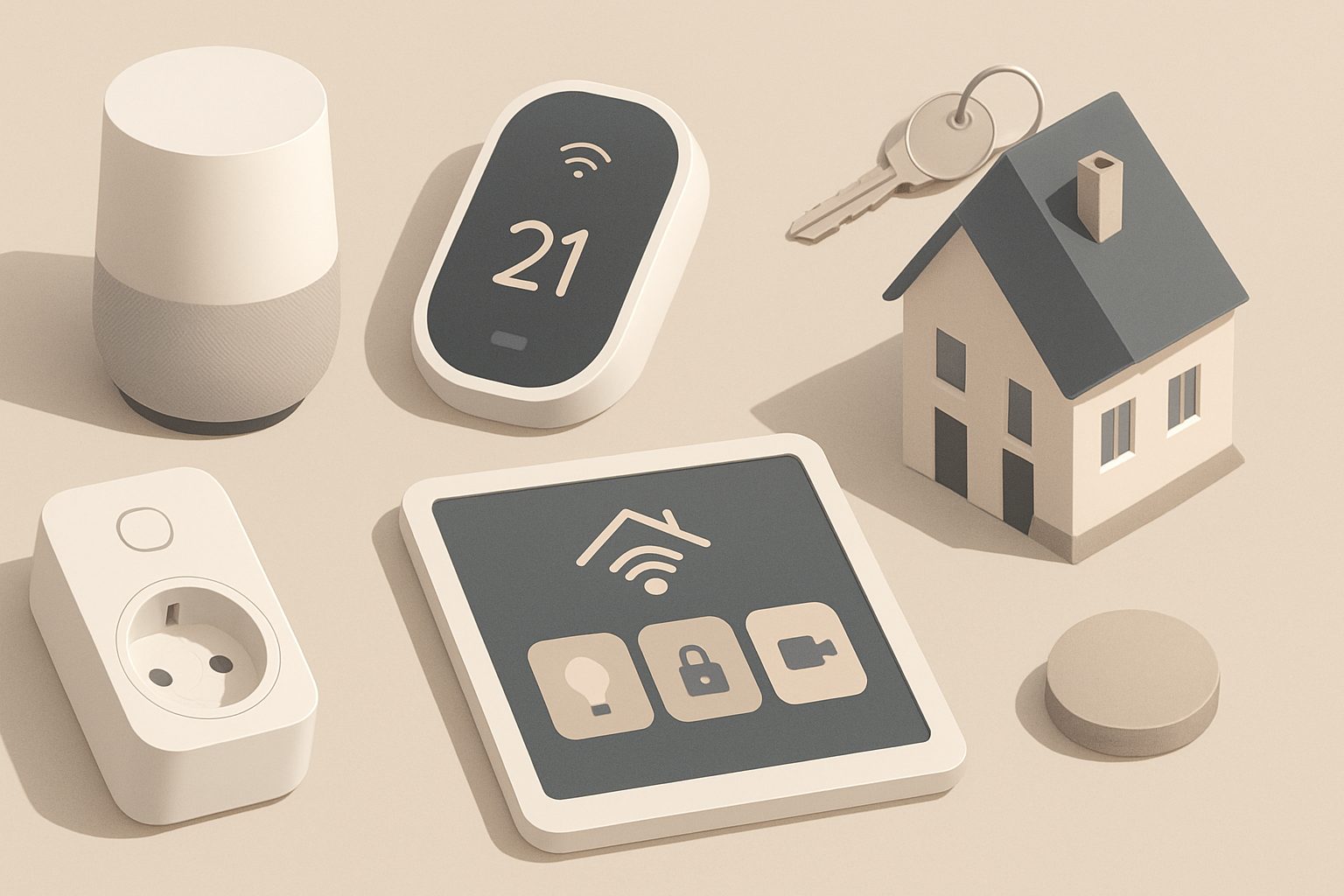
Do Smart Thermostats Actually Save Money in the UK? Real Savings Data 2026
Smart thermostats have become one of the most recommended energy-saving devices for UK homes, but the marketing often glosses over a simple question: how much do they actually save? The answer is messier than most reviews admit.
The truth is that a smart thermostat can reduce your heating bills, but the amount depends almost entirely on your current behaviour. If you're already disciplined about turning your boiler off when you leave the house, a smart thermostat might only trim a few quid a month. If you heat an empty home for eight hours a day, you could see meaningful savings. Understanding where you fall matters more than chasing a headline percentage.
How smart thermostats save energy
Smart thermostats work through three core mechanisms: scheduling, learning, and remote control.
Scheduling lets you program different temperatures for different times—cooler nights, absent afternoons, warmer evenings. Remote access means you can turn heating off if you're running late coming home, instead of letting it run all day. Learning thermostats (like some Tado models) observe your patterns and automatically adjust, removing guesswork from the equation.
The savings come from avoiding unnecessary heating—running your boiler when nobody's home, or keeping rooms at full temperature when they're empty. These are genuinely wasteful habits. Modern homes aren't airtight, but they hold heat well enough that dropping to 15°C during the day costs far less than maintaining 20°C all day.
What the data actually shows
Ofgem's most recent heating data (2025) shows UK households spend an average of £1,600–£1,800 annually on heating. The British Standards Institution and published studies from manufacturers suggest smart thermostats typically cut that by 10–15%, though some households see up to 20%.
Tado has published independent studies showing households achieve an average of 13% savings on heating costs when they actively use scheduling and geofencing features. Hive similarly claims 15% average reductions, though their figures include both scheduling and heating system optimisation that some older boilers can't fully exploit. Both figures come with a caveat: these are measured across households already engaged enough to install the device, install the app, and use its features. This creates selection bias toward savings-conscious users.
Real-world examples offer more nuance. A household paying £1,700 annually for heating and achieving a realistic 12% reduction saves approximately £200 per year. If the thermostat costs £200–£400 upfront (Hive, Tado, Nest models vary), the payback period stretches to 1–2 years. Add annual subscription costs (some Tado features require Tado Care at roughly £50 annually), and true savings take longer to realise.
Which homes save the most
Savings vary dramatically by circumstance:
- Homes with high heating costs and variable occupancy save best. If someone's always home, temperature requirements stay consistent, and you lose the benefit of absence-based scheduling. If energy bills are already modest, 12% of a small number is a small saving.
- Properties with poor insulation see less benefit. A draughty Victorian terrace loses heat fast; turning down from 20°C to 18°C only saves money if your walls actually retain heat.
- Older boiler systems limit maximum gains. Combi boilers and modern condensing systems respond efficiently to temperature adjustment. Ancient systems with poor controls may shrug off thermostat instructions.
- Behaviourally, active users win. Simply installing a smart thermostat and ignoring it saves almost nothing. The real savings come from using scheduling, geofencing, or app-based adjustments to avoid heating unoccupied homes.
Real-world obstacles
Several factors limit smart thermostat savings in practice:
Smart heating schedules only work if your routine is predictable. Erratic working hours, visitors, or shift work make geofencing and scheduling less effective. You're also dependent on remembering to actually use the app—many people install a device and forget it exists.
Some of the marketed savings assume you'll pair a smart thermostat with other energy measures: better insulation, draught-proofing, or updated radiator valves. The thermostat alone might only deliver 50–70% of a product's claimed savings. Ofgem tariffs also vary significantly by region and supplier; someone on an expensive fixed tariff will see larger absolute savings than someone who switched to a cheaper variable rate.
Installation can add £50–£150 if you're not comfortable with basic wiring. This extends payback periods and should factor into the maths.
Is a smart thermostat worth it?
For most UK homes, the honest answer is: probably yes, but not as a dramatic money-saver. You're looking at £200–£300 in annual savings under realistic conditions, with payback in 1–3 years. That's a decent return, but it's not the £500+ annual reduction some adverts hint at.
The secondary benefits often matter more: the convenience of controlling heating from your phone, the comfort of smarter scheduling, and the insight into exactly when and how much you're heating. These intangibles make the device worthwhile even if energy savings feel modest.
If your home has irregular occupancy, you're in a high-cost region, or you actively use scheduling features, a smart thermostat is a solid investment. If you're already diligent about turning off heating when you leave, savings will be marginal—and you might get better returns by insulating your loft or draught-proofing windows.
To decide which model suits your situation best, comparing specific features against your home's setup—rather than chasing headline savings figures—is where genuine value emerges.
More options
- Amazon Echo & Smart Home Hubs (Amazon UK)
- Smart Thermostats (Hive, Tado, Nest) (Amazon UK)
- Smart Lighting Starter Kits (Philips Hue, LIFX, WiZ) (Amazon UK)
- Smart Security Cameras & Video Doorbells (Amazon UK)
- Smart Plugs & Home Automation Accessories (Amazon UK)